Understanding R-Value and Insulation
R-Value is the industry-standard metric for measuring a sleeping pad’s thermal resistance — in other words, how effectively it prevents your body heat from escaping into the cold ground beneath you. The higher the R-Value, the better the insulation. At Xiaoqin Outdoor, we manufacture inflatable sleeping pads spanning an R-Value range of 1.0 to 7.0, allowing buyers to select the exact model suited to their target climate and season.
For summer camping in temperate zones, an R-Value of 1.0 to 2.0 is typically sufficient. Three-season use (spring through autumn) generally calls for an R-Value of 2.5 to 4.0. For winter alpine expeditions where ground temperatures can plunge well below freezing, pads with R-Values of 5.0 or higher are recommended. Our manufacturing process allows us to adjust the internal air chamber structure and baffling design to achieve the target R-Value for each SKU, giving B2B buyers precise control over their product specifications.
It is worth noting that ASTM F3340-18 is the current standardized testing method for R-Value in sleeping pads. All our R-Value ratings are based on this standard, ensuring consistency and comparability with international brands. This is particularly important for buyers who plan to market their pads alongside or against established outdoor brands in regulated markets such as the European Union and North America.
Ultralight Design for Backpacking
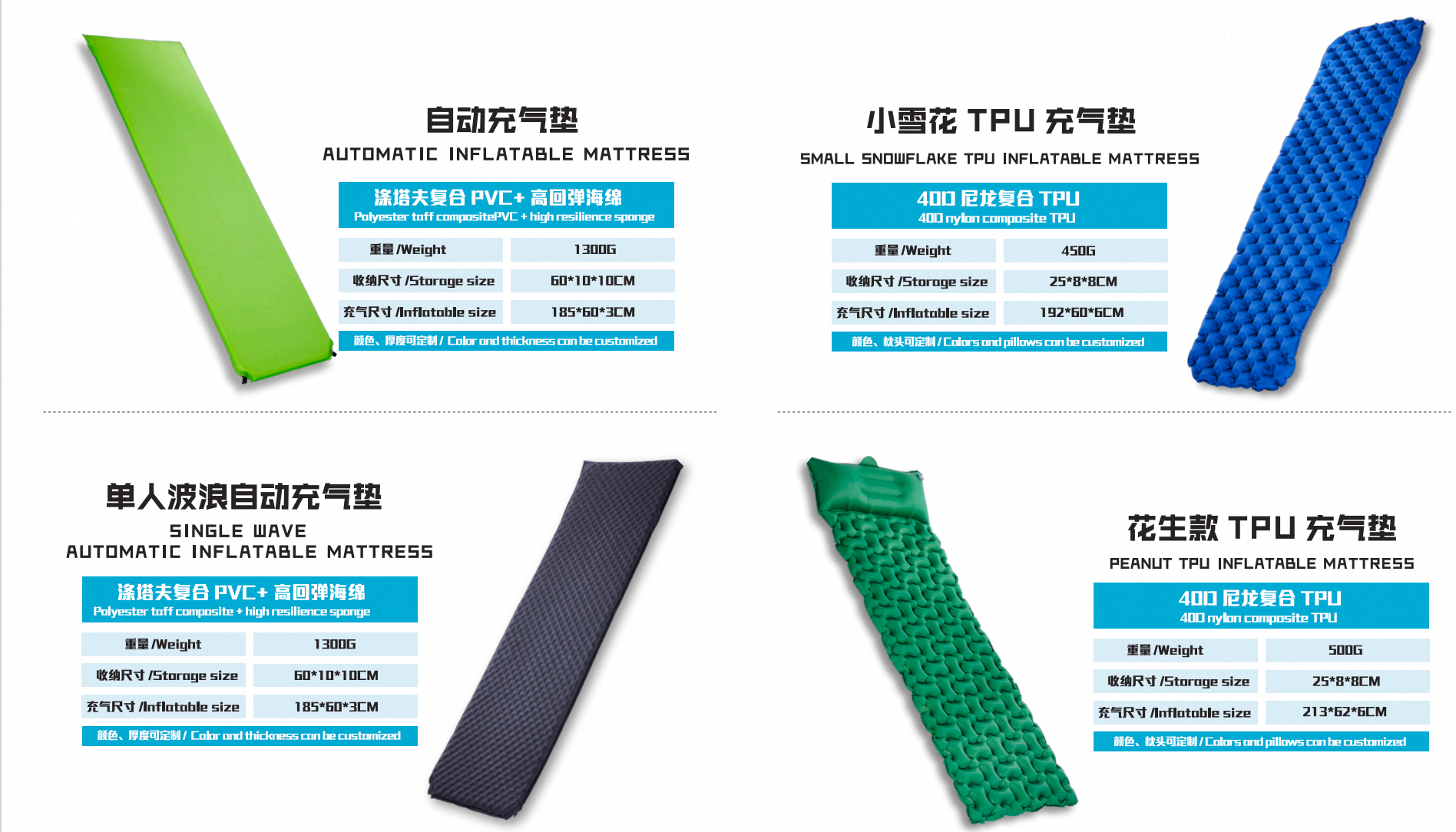
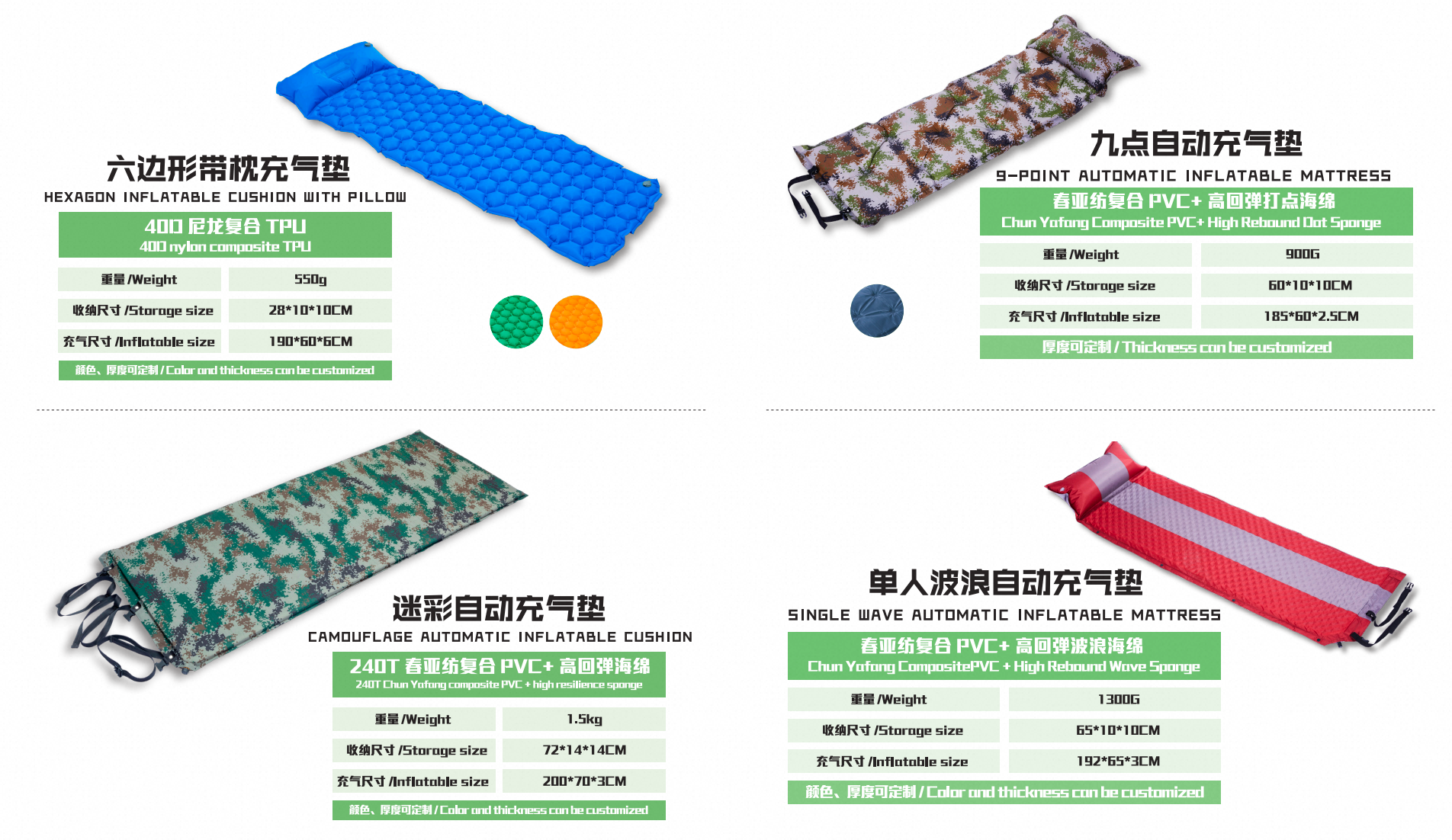
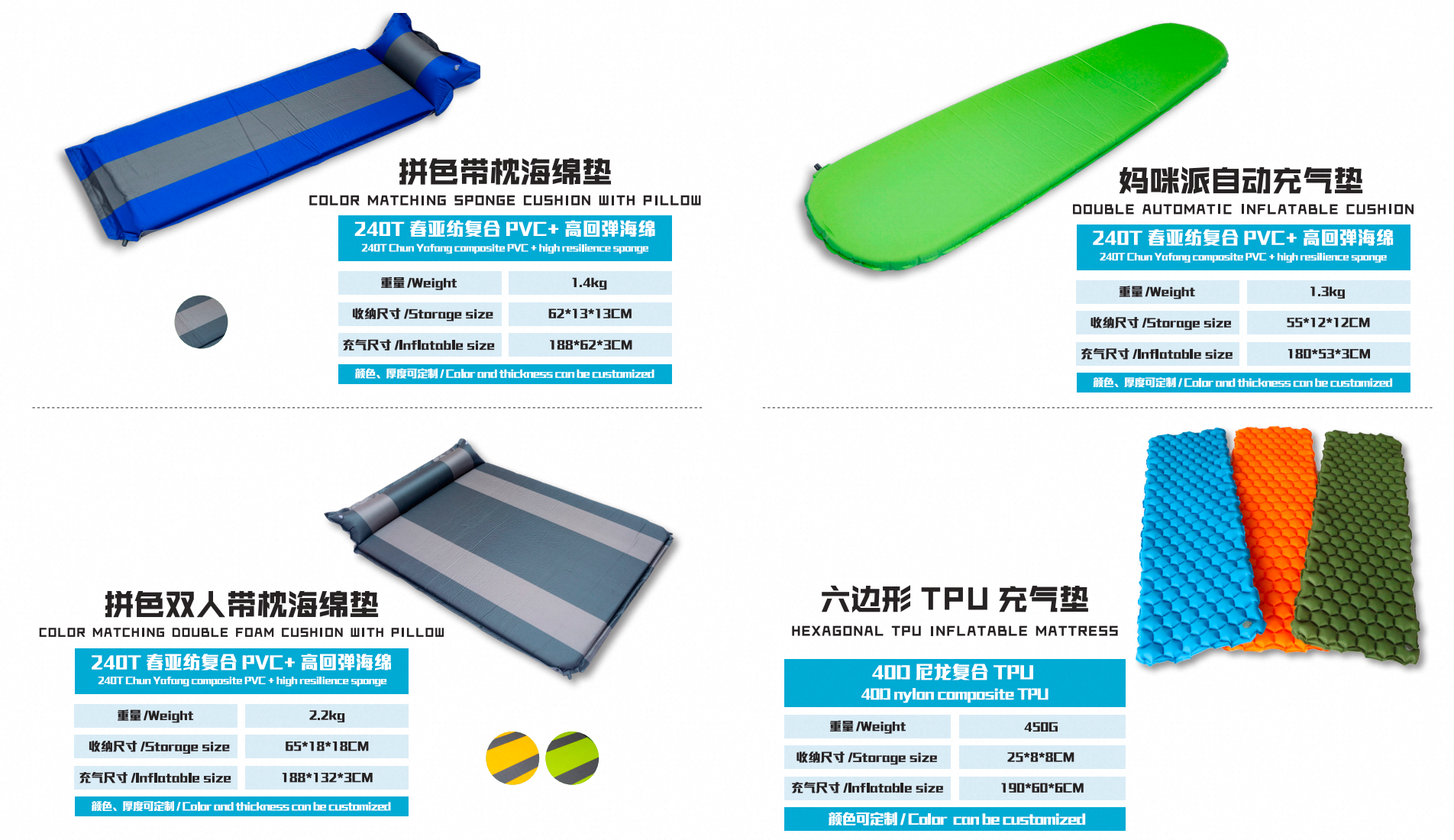
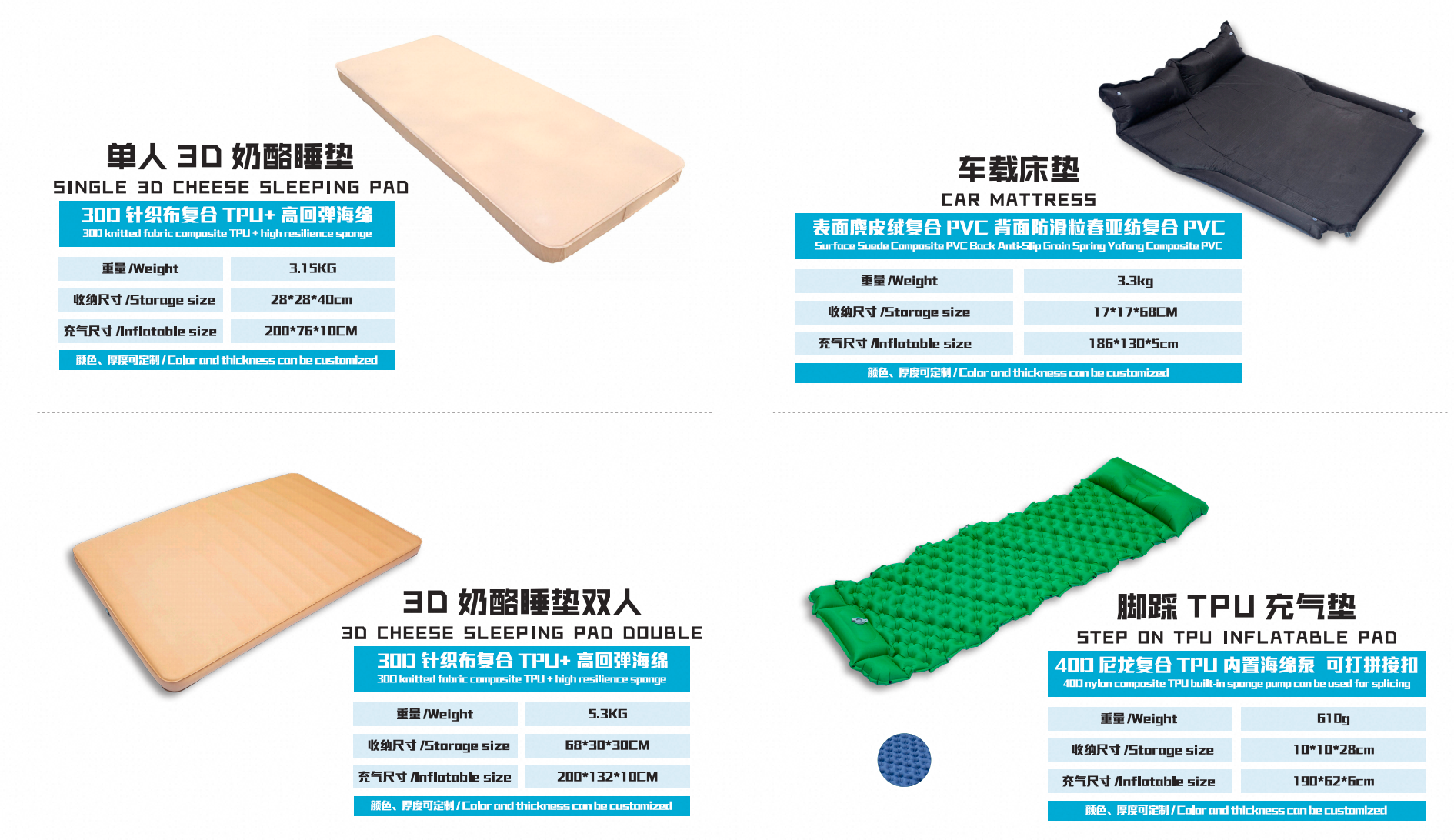
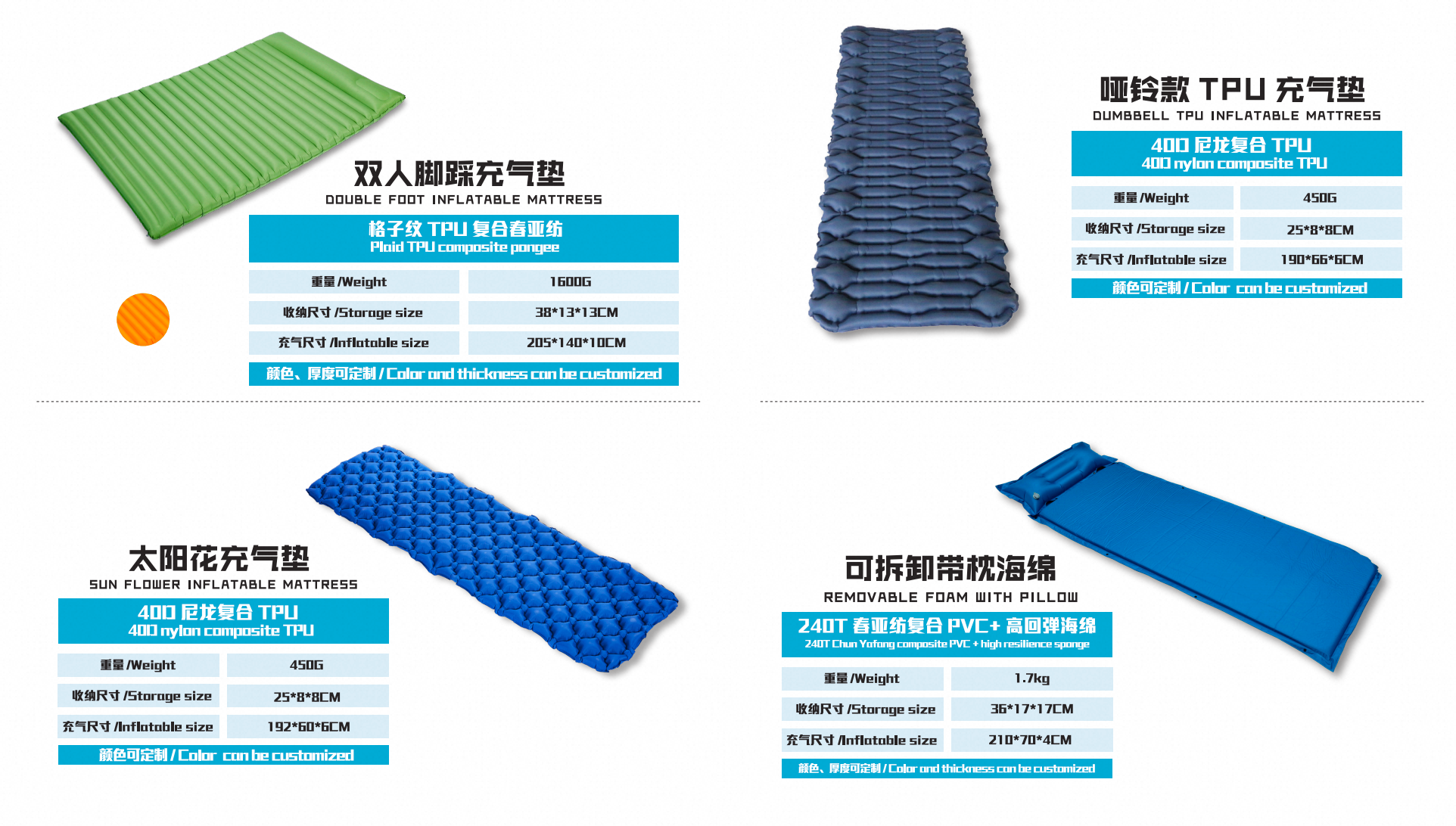
Weight is arguably the single most scrutinized specification in the backpacking gear market. Our inflatable sleeping pads are engineered to minimize weight without sacrificing comfort or durability. Starting at just 400g for the regular 183x51cm size, these pads compete directly with premium ultralight brands while remaining accessible at wholesale pricing.
The key to achieving this weight-to-performance ratio lies in the materials. We use 30D (denier) nylon for the top surface and 40D nylon for the bottom, providing a balance of softness against the skin and abrasion resistance on the underside. The TPU (thermoplastic polyurethane) coating is applied in a controlled lamination process that adds waterproofing and air-retention properties while adding minimal weight. The flat valve design is not only lighter than traditional screw valves but also flush with the pad surface, preventing snagging in tight pack environments.
When packed, the pad compresses to a remarkably small 10 x 20cm bundle — small enough to fit into a side pocket of a 40-liter backpack. This compact packed size is a major selling point for end consumers who prioritize pack volume efficiency, and it translates to lower shipping costs per unit for B2B buyers, as more units fit per carton and per container.
Material Technology: Nylon and TPU
The combination of nylon fabric and TPU coating represents the current gold standard in inflatable sleeping pad construction. Nylon is chosen over polyester for its superior strength-to-weight ratio, excellent tear resistance, and higher elongation at break — meaning the fabric can stretch slightly under pressure without rupturing. This is critical for a pad that must hold air under body weight for 8+ hours at a time.
TPU coating serves multiple functions. First, it creates an airtight membrane on the interior of the pad, preventing slow air leakage that can compromise comfort overnight. Unlike older PVC coatings, TPU remains flexible at low temperatures and does not become brittle or crack in cold conditions. Second, the TPU layer on the bottom surface provides a waterproof barrier that prevents ground moisture from penetrating the pad. Third, TPU is inherently more environmentally friendly than PVC, as it does not contain phthalates or release chlorine-based compounds during manufacturing or disposal.
Our lamination process uses precision-controlled temperature and pressure to bond the TPU to the nylon fabric, ensuring a consistent and durable bond. Each pad undergoes a 24-hour inflation test before leaving the factory to verify air retention performance. The welds at the baffle seams are high-frequency welded, creating joints that are as strong as the base material itself.
4-Season Performance Guide
Selecting the right sleeping pad for a given season requires understanding both R-Value and the environmental conditions specific to the use case. Our product line is designed to cover the full spectrum of 4-season use, and we help B2B buyers configure their orders based on their target market’s climate profile.
Summer (R-Value 1.0-2.0): Lightweight models prioritizing packability and comfort over insulation. Ideal for fair-weather campers, festival-goers, and casual outdoor enthusiasts. These models feature a thinner profile (5-6cm) to keep weight minimal.
3-Season / Shoulder Season (R-Value 2.5-4.0): The most versatile category, suitable for spring through autumn use in most climates. These pads strike a balance between insulation, weight, and packed size. A thickness of 6-8cm provides excellent comfort for side sleepers.
Winter / Alpine (R-Value 5.0-7.0): Maximum insulation for sub-freezing conditions. These models may feature additional internal baffling or reflective layers to boost thermal performance. While heavier and slightly bulkier when packed, they are essential for safety in extreme cold environments. Thickness ranges from 8-10cm for maximum comfort and insulation.
For B2B buyers targeting a specific niche, we recommend sampling multiple R-Value tiers before finalizing an order. Our OEM/ODM team can also develop custom R-Value configurations by adjusting baffle height, chamber geometry, and fabric denier to meet precise thermal performance targets.