The Convenience of Self-Inflation
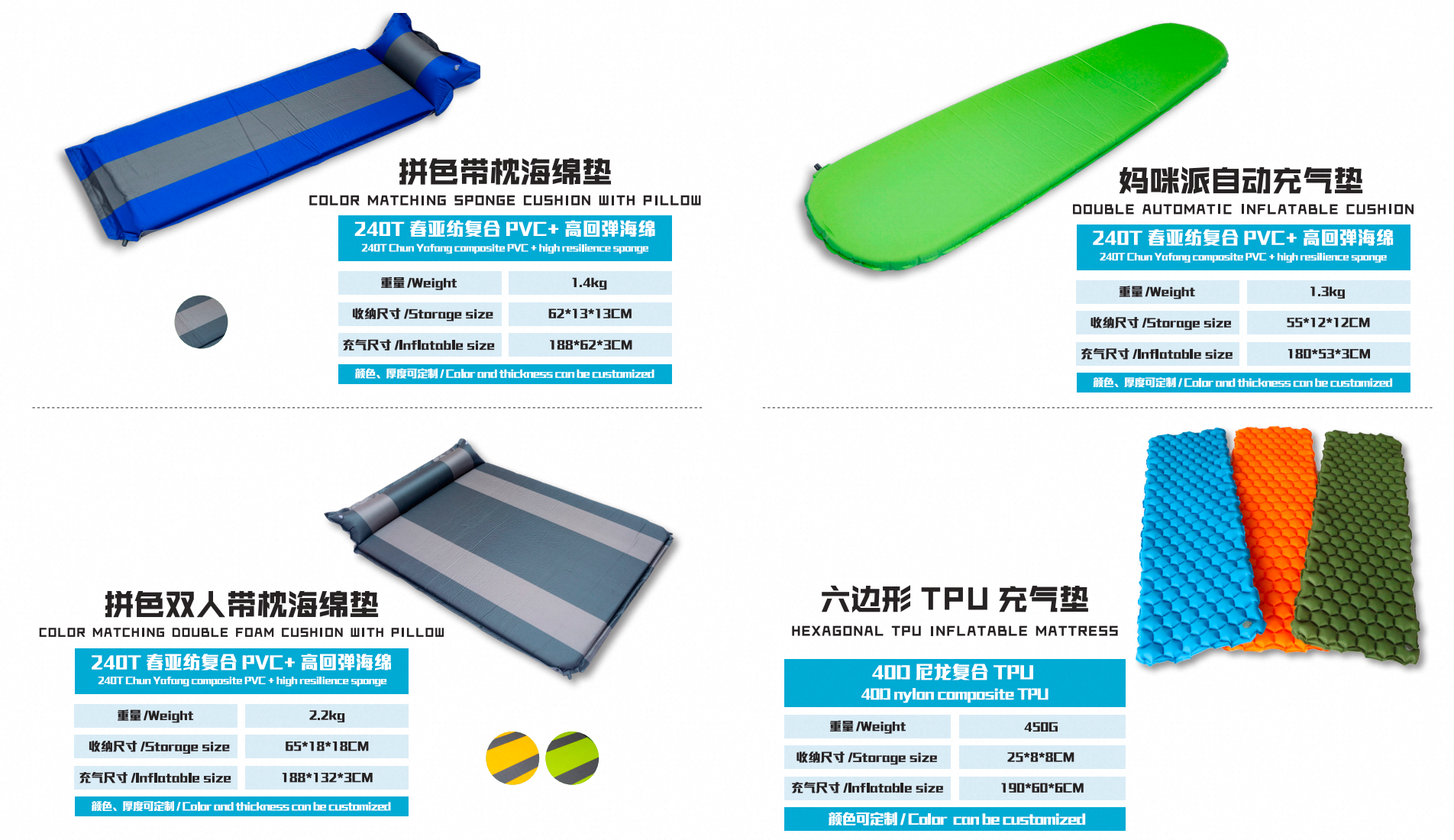
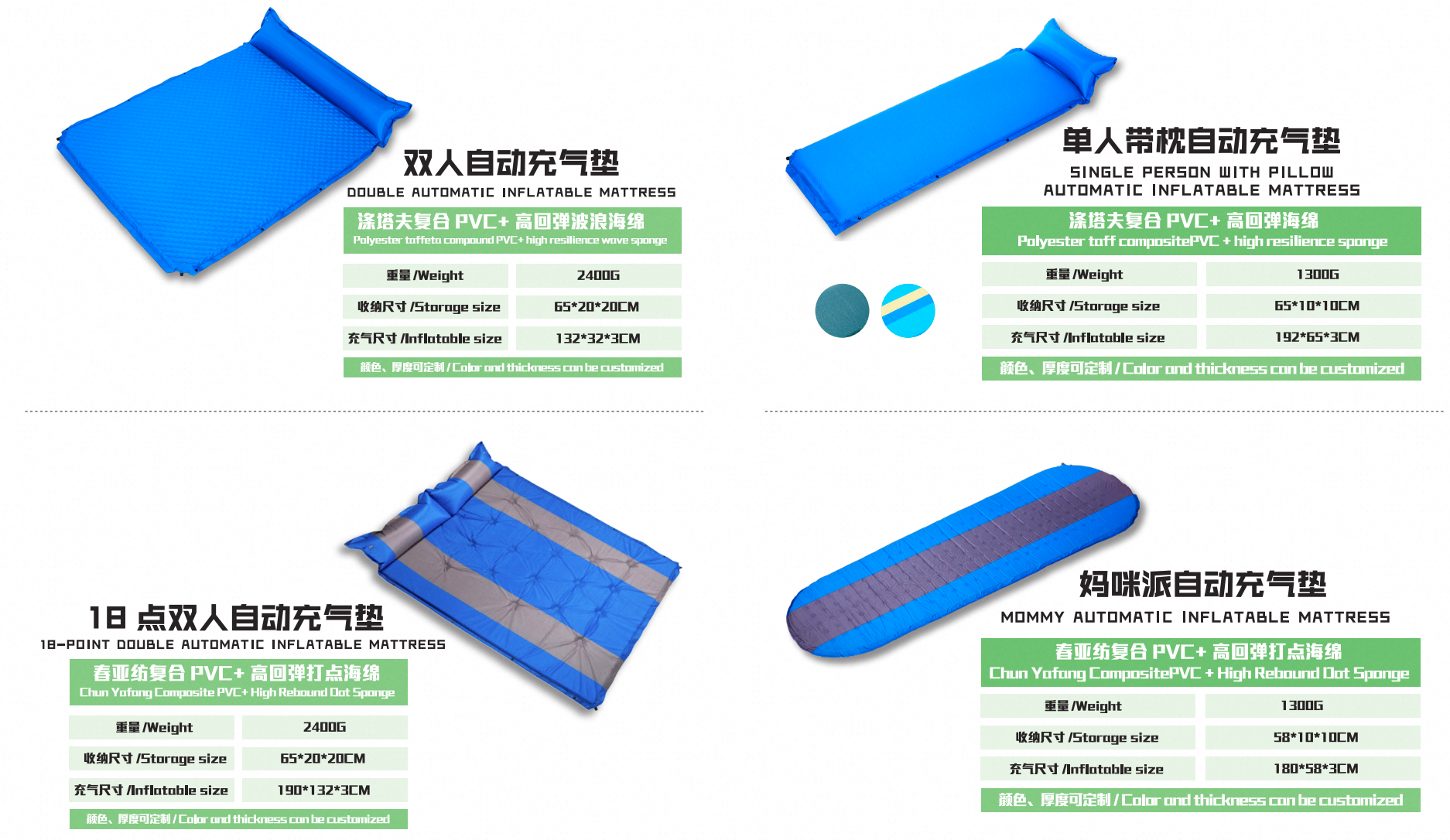
Self-inflating mats represent one of the most significant comfort innovations in camping gear history. The principle is elegantly simple: inside the pad is a core of open-cell polyurethane foam that behaves like a sponge for air. When the valve is opened, the compressed foam naturally expands, drawing air in through the valve to fill the pad automatically. The camper only needs to add a few breaths of air to achieve firmness, then close the valve.
This eliminates the need for carrying a separate pump or spending energy manually inflating a pad after a long day on the trail. For B2B buyers targeting the family camping, car camping, or glamping markets, self-inflating mats are an exceptionally strong product category because they remove a common pain point that deters casual campers — the effort and inconvenience of setting up sleeping gear.
Our self-inflating mats use precision-engineered twist and flip valves that create a reliable airtight seal. The valve mechanism is designed for thousands of open-close cycles without degradation, and the valve housing is recessed into the pad surface to prevent accidental opening during transport. For buyers concerned about long-term product durability, our valves are replaceable — a key service differentiator that extends product lifespan and reduces warranty claims.
PU Foam Density and Comfort
The heart of any self-inflating mat is the polyurethane (PU) foam core. We use high-density open-cell PU foam that provides an optimal balance of cushioning, insulation, and recovery. The open-cell structure allows air to flow freely through the foam, enabling rapid self-inflation while maintaining structural integrity under body weight.
Foam density is measured in kilograms per cubic meter (kg/m³), and our standard foam densities range from 25 to 40 kg/m³ depending on the model and target market. Higher density foam provides firmer support and better durability but increases weight — making it ideal for car camping and base camp scenarios where weight is less critical. Lower density foam keeps the pad lighter for backpacking use but may sacrifice some long-term compression recovery.
For OEM/ODM clients, we offer custom foam formulations including memory foam layers for premium positioning, perforated foam to reduce weight without significantly compromising insulation, and variable-density foam that combines a firmer base layer with a softer top layer for enhanced comfort. These options allow buyers to create differentiated products that stand out in competitive retail environments.
All our PU foam is manufactured in-house under strict quality control, ensuring consistent density and cell structure across production batches. This consistency is critical for maintaining uniform R-Value ratings and inflation performance across an entire production run, which is especially important for buyers supplying large retail chains with strict quality assurance requirements.
Surface Materials and Durability
The outer fabric of a self-inflating mat determines its durability, feel, and weather resistance. We use high-tenacity polyester fabric as the standard surface material, offering excellent abrasion resistance, UV stability, and colorfastness. Polyester is preferred over nylon in this application because it has lower water absorption and better dimensional stability under varying humidity conditions.
The fabric is coated with either PVC or TPU on the interior surface. PVC coating is the traditional choice, offering excellent waterproofing and bonding characteristics at a competitive price point. It is well-suited for budget and mid-range product tiers. TPU coating is the premium option, providing superior flexibility at low temperatures, better environmental sustainability (PVC-free), and lighter weight. We offer both coating options to accommodate different price points and market positioning strategies.
Surface texture is another customization point. We offer smooth, embossed diamond, and brushed finishes. Embossed patterns improve grip, preventing sleeping bags from sliding off the pad during the night. The brushed finish provides a softer, warmer feel against bare skin — a feature that is particularly valued in the European market. All surface treatments are tested for colorfastness and abrasion resistance according to international textile standards.
The seam construction is equally important for durability. Our mats feature fully taped seams on the interior, preventing moisture ingress into the foam core. The perimeter seam is double-stitched and heat-sealed, creating a waterproof and airtight bond that withstands repeated folding, rolling, and compression during packing.
Comparison: Self-Inflating vs Air Pad
B2B buyers often ask us to recommend between self-inflating mats and air pads for their product lines. The answer depends on the target customer, use case, and price positioning. Understanding the trade-offs helps buyers make informed purchasing decisions and build a product mix that covers multiple market segments.
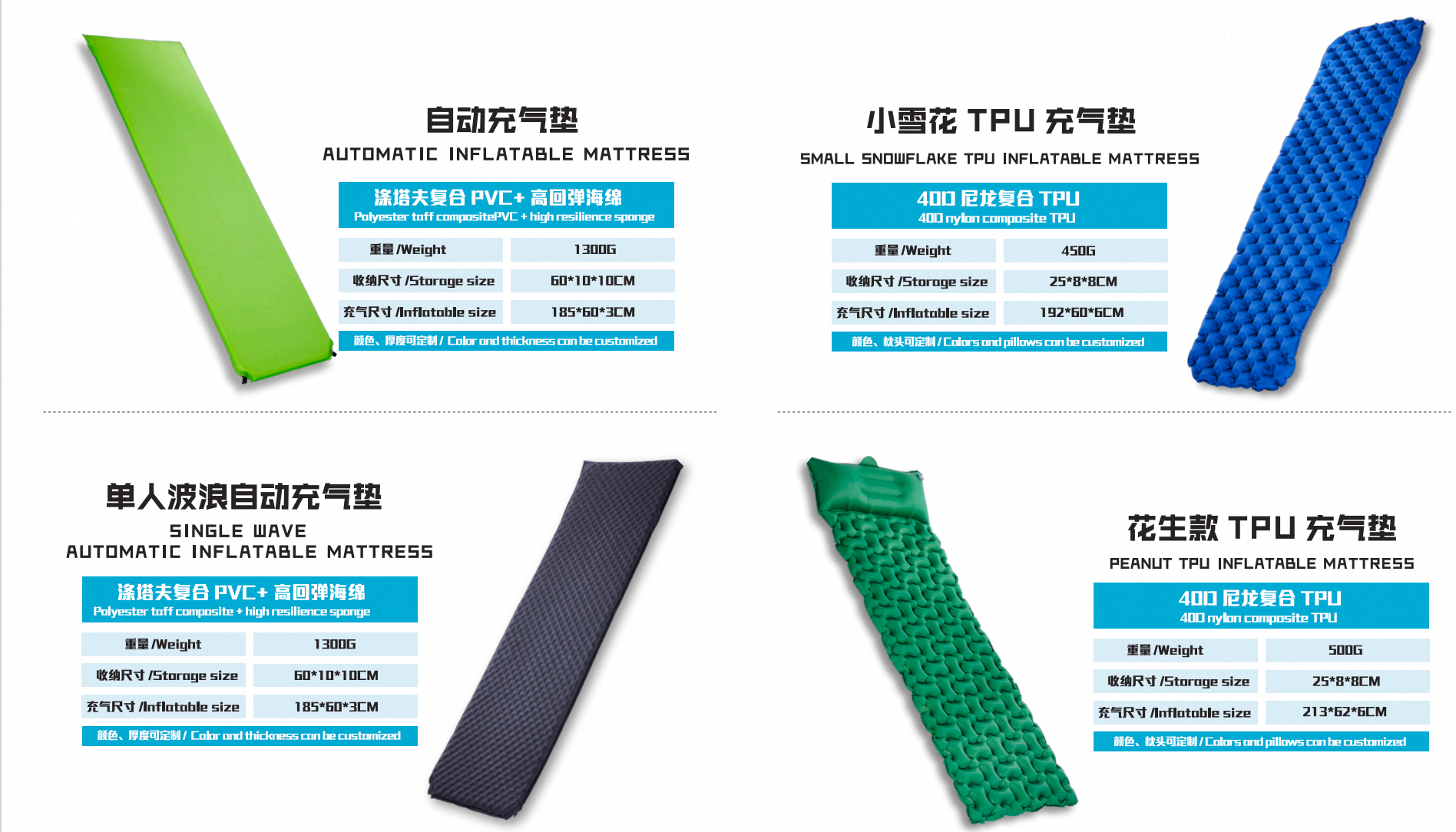
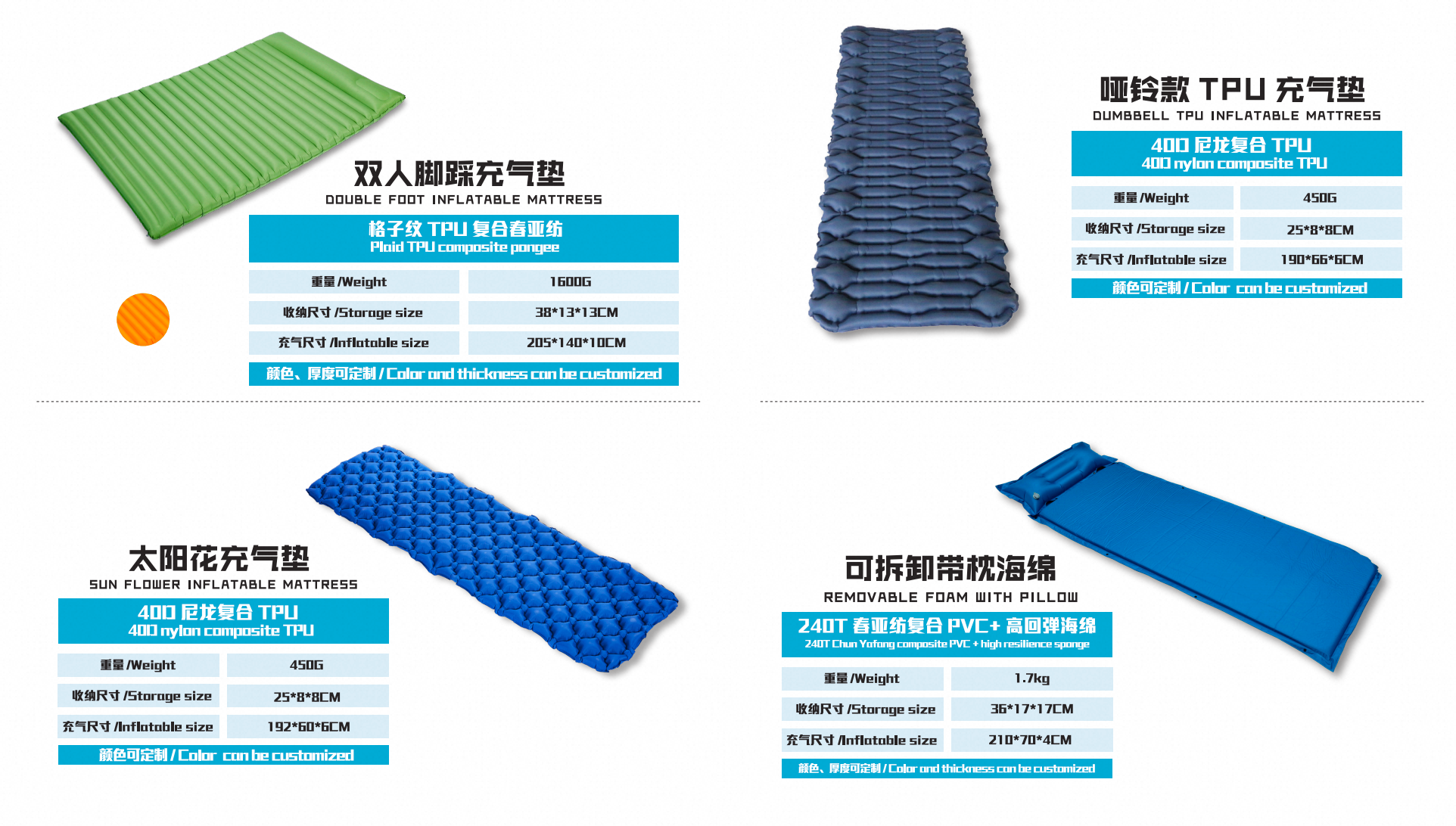
Weight and Packability: Air pads are significantly lighter and more compact. A typical inflatable sleeping pad weighs 400-800g and packs to roughly 10x20cm, while a comparable self-inflating mat weighs 700g-2.5kg and packs much larger. For backpacking-focused product lines, air pads are the clear winner.
Comfort and Ease of Use: Self-inflating mats win on convenience. No pump or manual inflation is needed — simply open the valve and the pad inflates itself. The foam core also provides a more consistent, supportive sleeping surface compared to an air-only pad, which can feel bouncy or unstable. For family camping, car camping, and casual outdoor markets, self-inflating mats offer superior user experience.
Insulation: The foam core in self-inflating mats provides inherent insulation independent of air temperature. Air pads rely on trapped air for insulation, which can conduct cold if the R-Value is not sufficient. For winter use, self-inflating mats offer a reliability advantage, though high-R-Value air pads can match or exceed their thermal performance.
Durability: Self-inflating mats are generally more puncture-resistant because the foam core maintains some structural integrity even if the pad is punctured. An air pad with a puncture becomes completely flat. However, self-inflating mats are harder to field-repair due to their foam construction.
Price Positioning: Self-inflating mats typically command a higher retail price than air pads of comparable size, reflecting the additional material cost of the foam core. For buyers building a multi-tier product line, we recommend offering both categories: air pads for the ultralight/backpacking segment and self-inflating mats for the comfort/family camping segment.