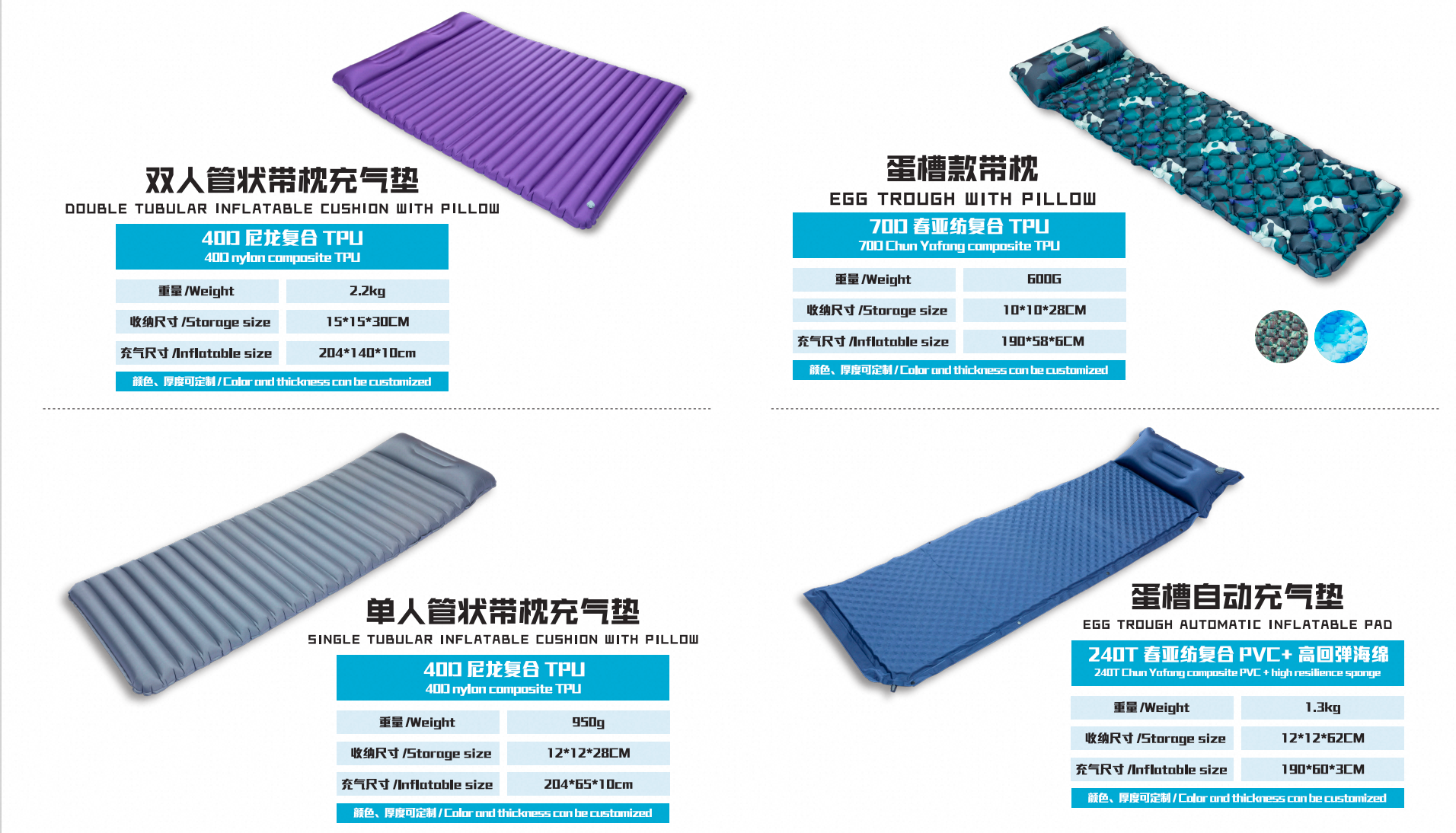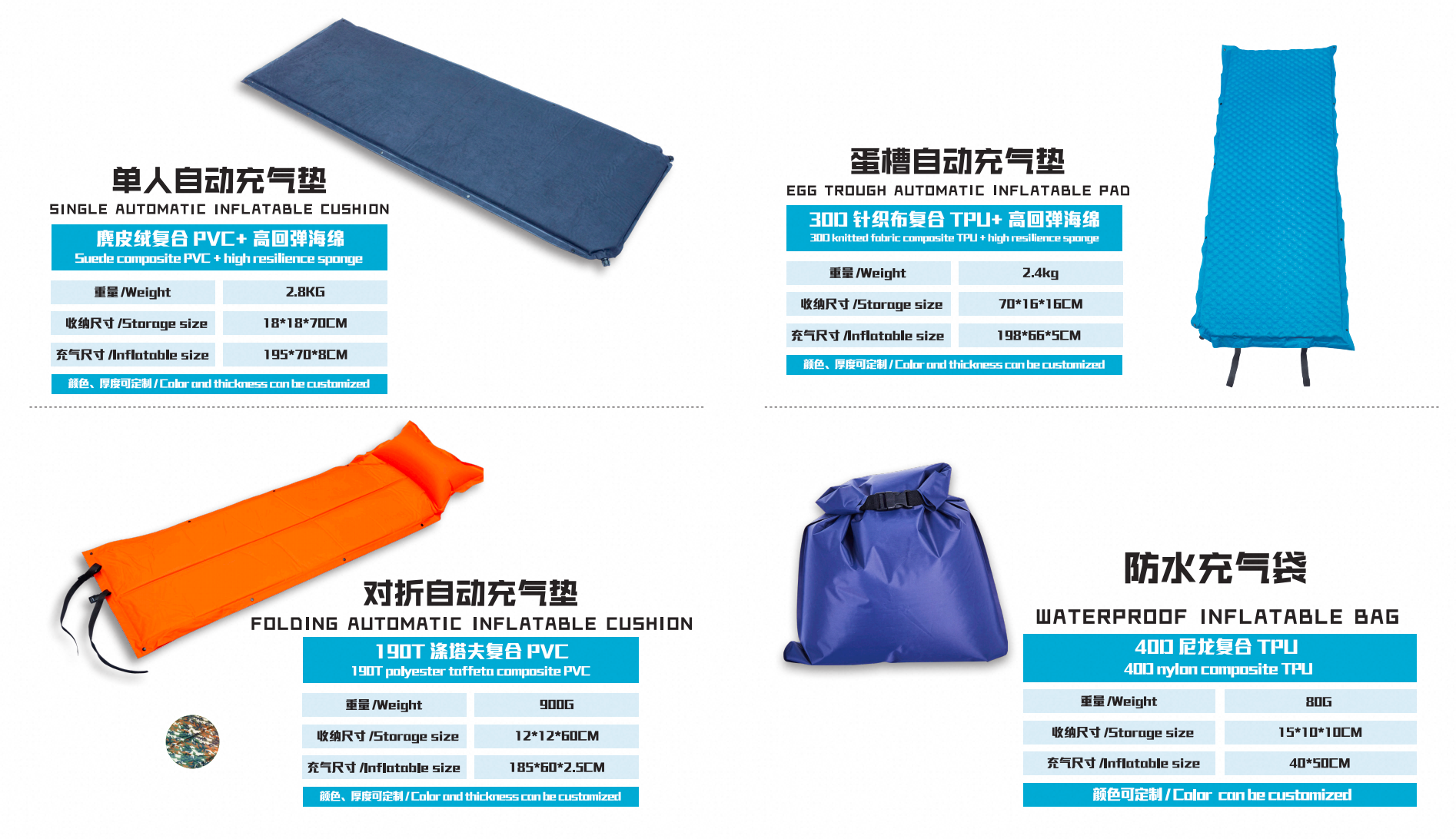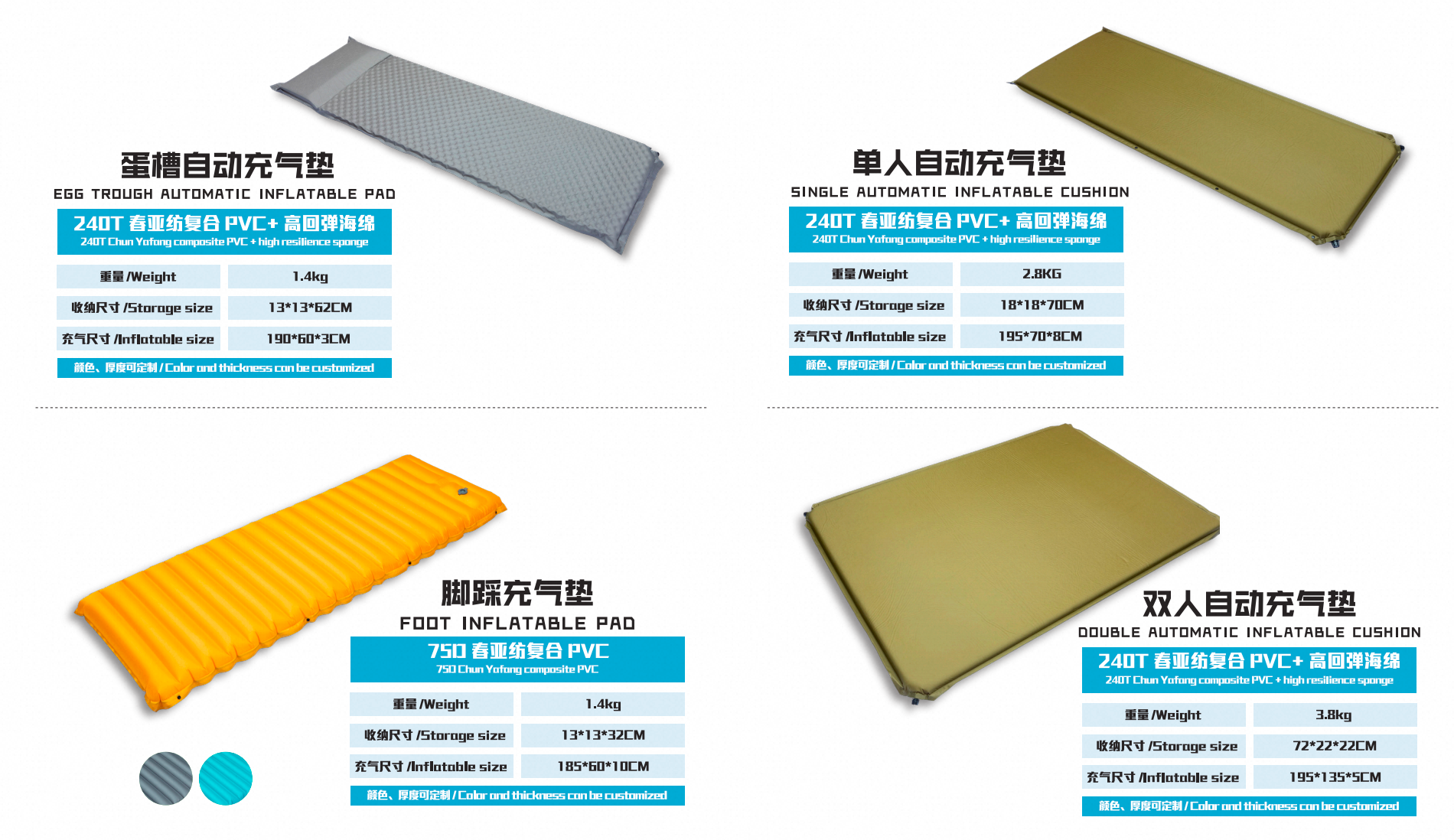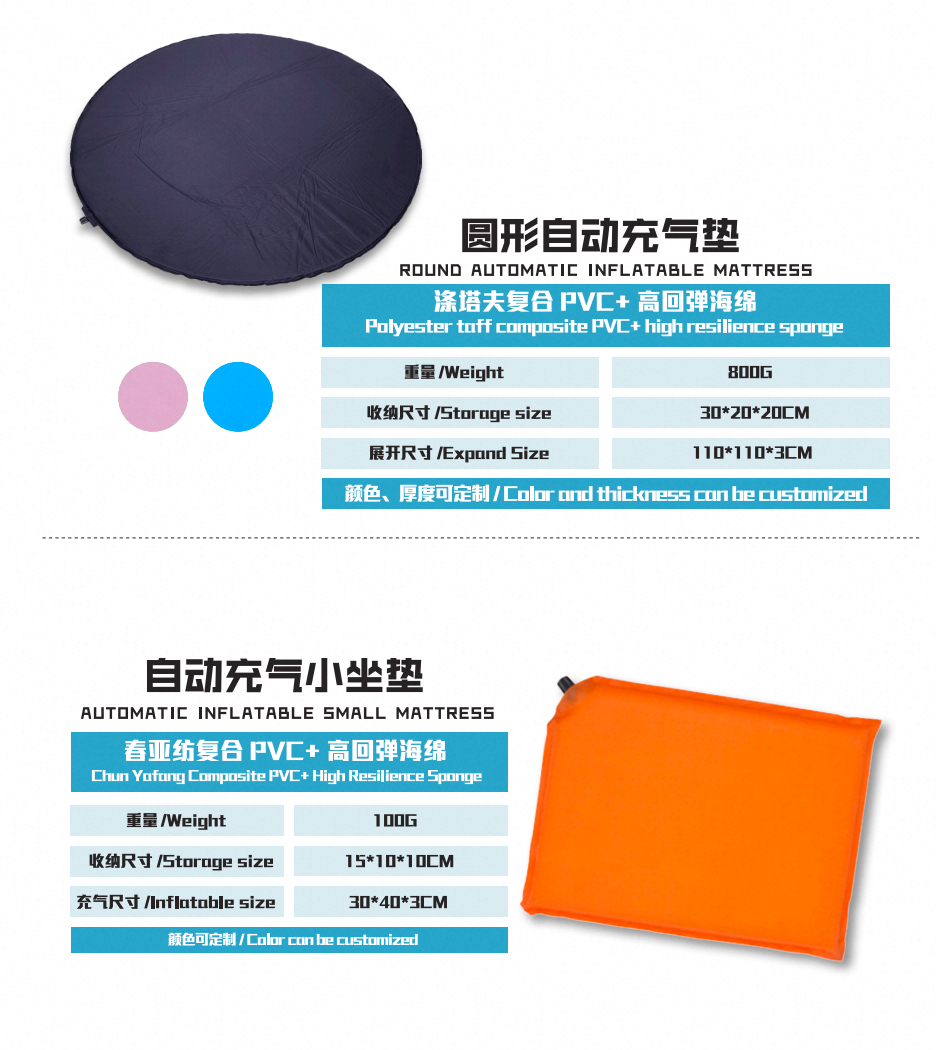
When you look at an inflatable sleeping pad, the pattern of chambers visible on its surface is not just aesthetic — it is the baffle design, and it is one of the most important factors determining how the pad performs. Baffle design affects comfort, insulation, stability, weight, and packed size. For B2B buyers and product developers, understanding baffle construction is essential for selecting or designing sleeping pads that meet specific market needs.
What Are Baffles in a Sleeping Pad?
Baffles are the internal walls that divide an inflatable sleeping pad into separate air chambers. Created by welding or bonding the top and bottom fabric layers together at intervals, baffles control the shape and thickness of the pad when inflated. Without baffles, an inflated pad would balloon into a sphere — useless for sleeping.
The baffle pattern determines how air is distributed across the pad surface, which in turn affects how the pad feels under the body, how stable it is when the user shifts position, and how well it insulates. Different baffle designs serve different purposes, and choosing the right one is a key product development decision.
Common Baffle Designs
Several baffle patterns are used in modern sleeping pads, each with its own performance characteristics:
- Horizontal Baffles: Chambers run across the width of the pad (perpendicular to the body). This is the most common and traditional design. Horizontal baffles are easy to manufacture, provide uniform support, and allow the pad to roll up compactly. However, they can feel less stable for side sleepers.
- Vertical Baffles: Chambers run along the length of the pad (parallel to the body). Vertical baffles provide excellent lateral stability and prevent the user from rolling off the pad. They are popular in wider pads designed for restless sleepers.
- V-Shaped Baffles: Chambers form a V or chevron pattern. This design combines the stability of vertical baffles with the comfort of body-contouring support. The V-shape creates a cradling effect that prevents the user from sliding and is particularly comfortable for side sleepers. Common in premium air pads.
- Quilted Baffles: Small, square or diamond-shaped chambers that create a mattress-like surface. Quilted baffles provide a plush, even feel but add manufacturing complexity and slightly more weight. Often used in comfort-oriented pads.
- Egg-Crate (Wave) Design: Alternating raised and depressed sections that mimic an egg carton. This design saves material and weight while providing reasonable cushioning. Common in budget and ultralight pads.
How Baffles Affect Comfort and Support
Baffle design directly influences how the pad supports the body. The key comfort factors include:
- Pressure distribution: V-shaped and quilted baffles distribute body weight more evenly, reducing pressure points at hips and shoulders. This is especially important for side sleepers.
- Body contouring: Designs with more, smaller chambers (quilted, V-shaped) conform better to body curves, while large-chamber designs (horizontal) feel firmer and more uniform.
- Thickness consistency: Baffles that are too widely spaced allow the pad to bulge between welds, creating an uneven surface. Tighter baffle spacing maintains consistent thickness across the pad.
- Sleeping position suitability: Side sleepers benefit from V-shaped or quilted baffles that cushion pressure points. Back sleepers are comfortable on most designs. Stomach sleepers prefer firmer, evenly spaced baffles.
Baffles and Insulation Performance
Baffle design has a measurable impact on a pad’s R-Value. The relationship works as follows:
- Air chamber size: Smaller chambers (from tighter baffle spacing) create more internal surface area, which slightly improves heat retention. However, the effect is modest compared to material and thickness.
- Weld points: Each baffle weld creates a point of direct contact between the top and bottom fabric, bypassing the insulating air layer. More baffles mean more weld points, which can slightly reduce overall R-Value.
- Reflective layer integration: Some baffle designs incorporate reflective films within the chambers to reflect radiant body heat. This is most effective in V-shaped and vertical designs where chambers are larger.
- Insulation placement: In insulated air pads, synthetic or down fill is placed inside the chambers. Baffle design must allow even distribution of insulation material for consistent warmth.
The net effect is that baffle design can cause R-Value variations of 0.3–0.5 for otherwise identical pad dimensions. For more on thermal performance, see our R-Value guide.
Stability and Roll-Off Prevention
One of the most common complaints about air pads is the sensation of rolling off the edge. Baffle design plays a critical role in edge stability:
- Vertical and V-shaped baffles provide the best lateral stability, keeping the user centered on the pad.
- Horizontal baffles can create a “rolling pin” effect where the user slides to one side. Wider pads (66+ cm) mitigate this issue.
- Edge reinforcement: Some pads feature larger or reinforced edge baffles that act as a raised lip, physically preventing the user from rolling off. This is particularly effective in pads designed for restless sleepers or children.
- Flat vs. tubular edges: Pads with vertical sidewalls (tubular construction) provide a larger usable surface area than those with tapered edges, improving stability and comfort.
Weight and Packability Trade-offs
Baffle design involves inherent trade-offs between comfort, weight, and packed size:
- More baffles = more welds = more material: Complex baffle patterns (quilted, V-shaped) require more welding and slightly more material, adding 20–60g to the pad weight.
- Packed size: Horizontal baffles allow the pad to roll into a tight cylinder, achieving the smallest packed size. V-shaped and quilted baffles may not compress as tightly.
- Ultralight optimization: For ultralight pads, manufacturers often use larger, fewer baffles with thinner fabrics to minimize weight. The trade-off is reduced comfort and stability.
- Manufacturing cost: Simple horizontal baffles are the cheapest to produce. V-shaped and quilted patterns require more precise welding equipment and longer production times, increasing unit cost by 15–30%.
Choosing the Right Baffle Design for Your Product
Selecting the optimal baffle design depends on your target market and product positioning:
- Budget / mass market: Horizontal baffles offer the best cost-to-performance ratio. Simple to manufacture, adequate comfort, and easy to roll up.
- Mid-range comfort: V-shaped baffles provide excellent stability and comfort at a moderate cost premium. Best all-around choice for general outdoor retail.
- Premium / backpacking: V-shaped or quilted baffles with reflective insulation layers. The higher cost is justified by superior performance and higher retail price points.
- Family / car camping: Quilted baffles in thicker pads (8–10 cm) deliver mattress-like comfort. Weight is less of a concern; comfort is the priority.
- Ultralight / thru-hiking: Horizontal or egg-crate baffles with minimal material. Prioritize weight savings over comfort.
Conclusion
Baffle design is a fundamental aspect of sleeping pad engineering that affects every aspect of performance — from comfort and stability to insulation, weight, and manufacturing cost. By understanding the strengths and trade-offs of each baffle pattern, B2B buyers and product developers can make informed decisions that align with their market positioning and price targets.
At Xiaoqin Outdoor, we manufacture sleeping pads with all major baffle designs and offer custom baffle development for OEM/ODM clients. Our engineering team can help you select or design the optimal baffle pattern for your target market, ensuring the right balance of comfort, performance, and cost. with our product development team.