When it comes to inflatable outdoor gear — air beds, sleeping pads, waterproof bags, and floatation devices — two materials dominate the market: TPU (thermoplastic polyurethane) and PVC (polyvinyl chloride). Both are widely used, but they differ significantly in performance, environmental impact, weight, and cost. For B2B buyers and product developers, choosing the right material is a decision that affects product quality, pricing, brand reputation, and regulatory compliance.
What is TPU?
TPU, or thermoplastic polyurethane, is a versatile elastomer that combines the durability of rubber with the processability of plastics. In outdoor gear, TPU is commonly used as a coating on nylon or polyester fabrics to create waterproof, airtight chambers. It is known for its flexibility, abrasion resistance, and eco-friendliness.
TPU is used in high-end inflatable sleeping pads, ultralight air mats, waterproof dry bags, and premium air beds. Leading outdoor brands increasingly favor TPU for its combination of performance and environmental advantages.
What is PVC?
PVC, or polyvinyl chloride, is one of the most widely produced synthetic plastics in the world. In outdoor gear, PVC is used as a heavy-duty coating on polyester fabrics to create waterproof and airtight products. It has been the industry standard for decades due to its low cost and ease of manufacturing.
PVC is commonly found in budget air beds, economical inflatable mattresses, beach floats, and entry-level waterproof bags. While it offers excellent cost efficiency, it has come under scrutiny for environmental and health concerns.
Durability and Abrasion Resistance
Durability is a critical factor for outdoor gear that will be exposed to rough terrain, repeated inflation cycles, and varying temperatures.
- TPU: Offers superior abrasion resistance and puncture resistance. TPU-coated fabrics can flex repeatedly without cracking, and they maintain flexibility in cold temperatures. Typical lifespan for TPU air mats is 5–10 years with proper care.
- PVC: Adequate for light to moderate use but tends to stiffen and crack in cold weather. PVC is more prone to creasing damage and has a shorter flex life. Typical lifespan is 2–5 years depending on usage intensity.
For products marketed as durable or premium, TPU is the clear winner. For disposable or seasonal-use products, PVC may suffice.
Weight and Packability
Weight is a decisive factor for backpackers and anyone who carries their gear. TPU is significantly lighter than PVC for the same strength level.
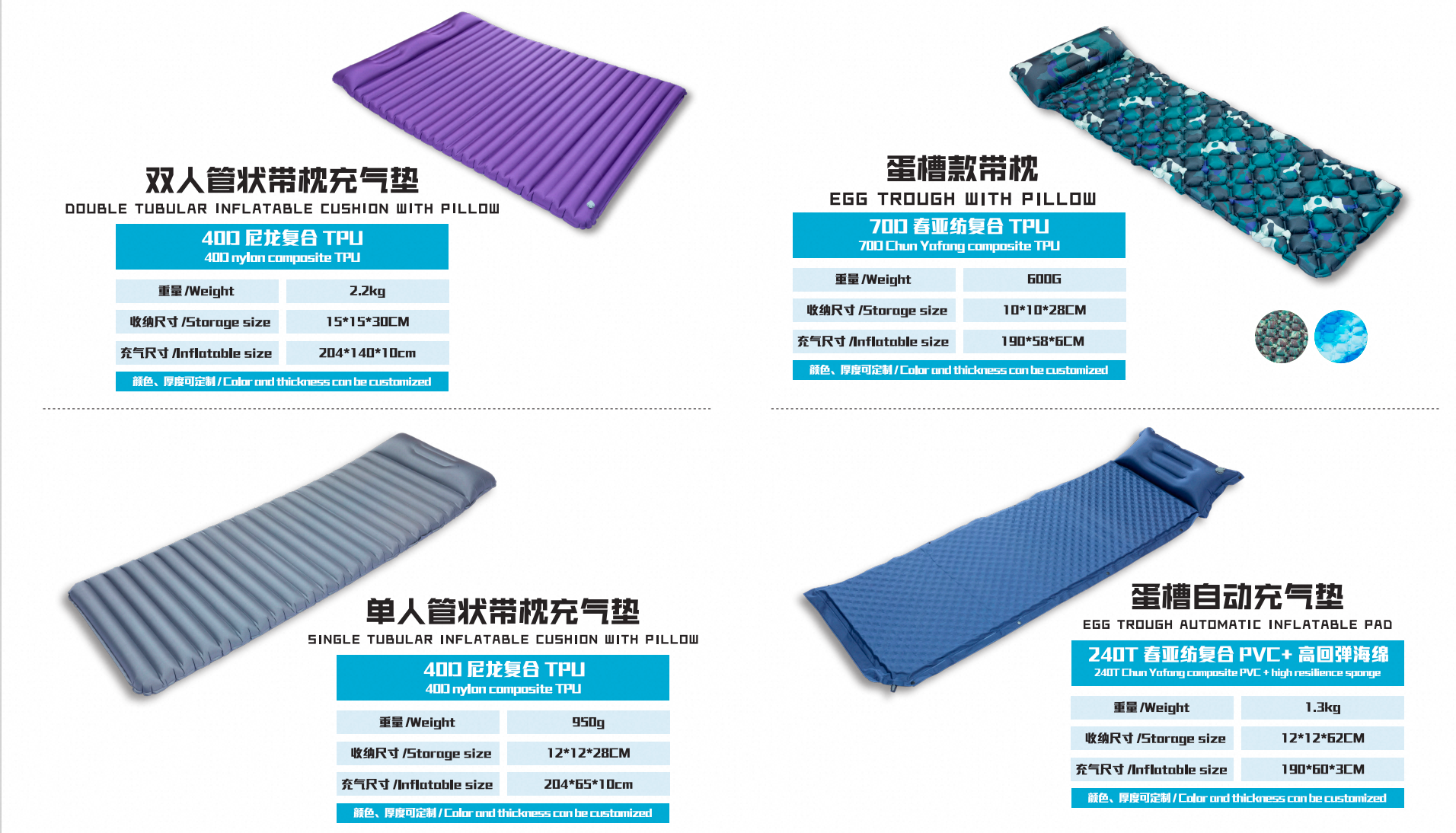
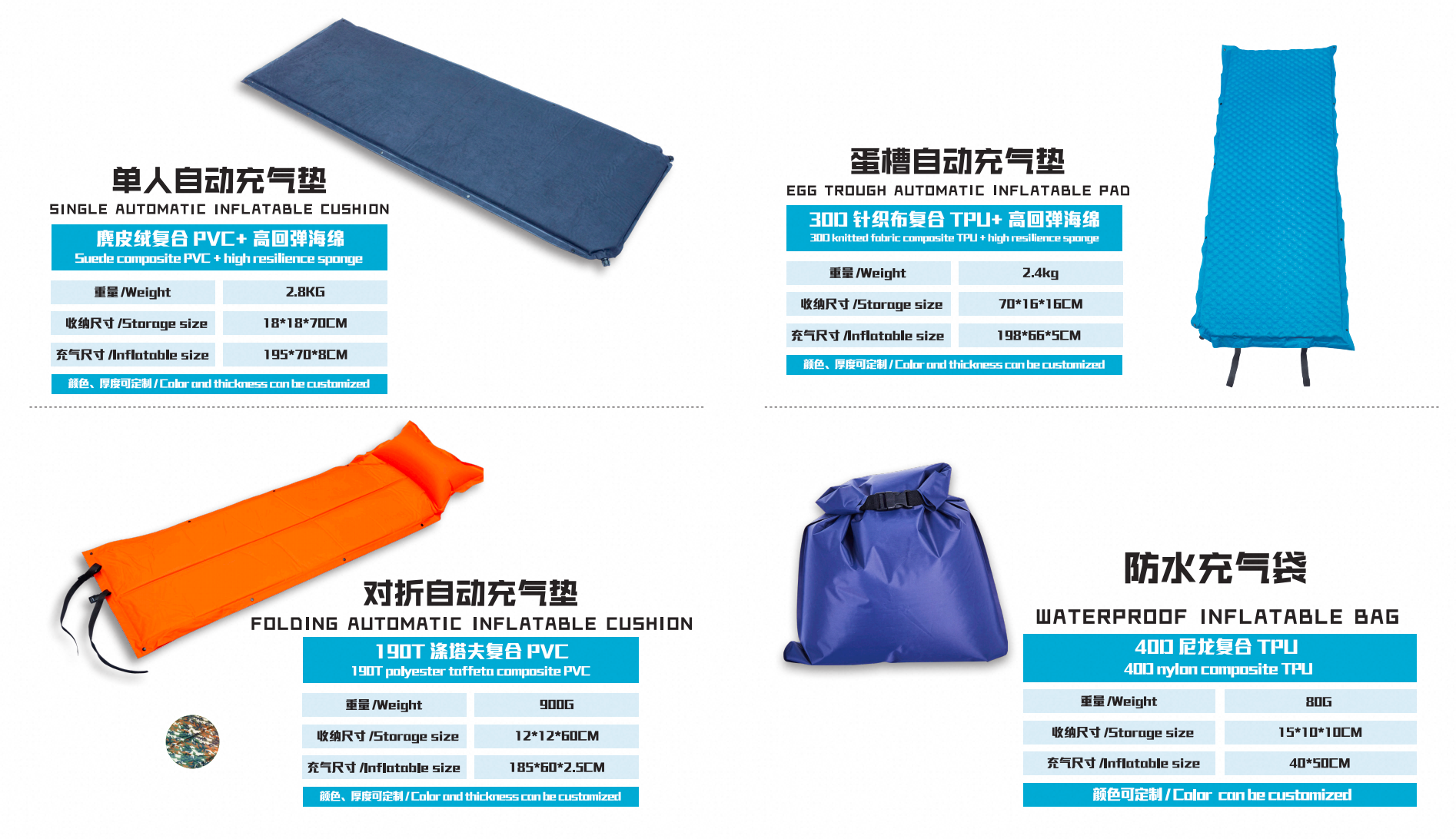
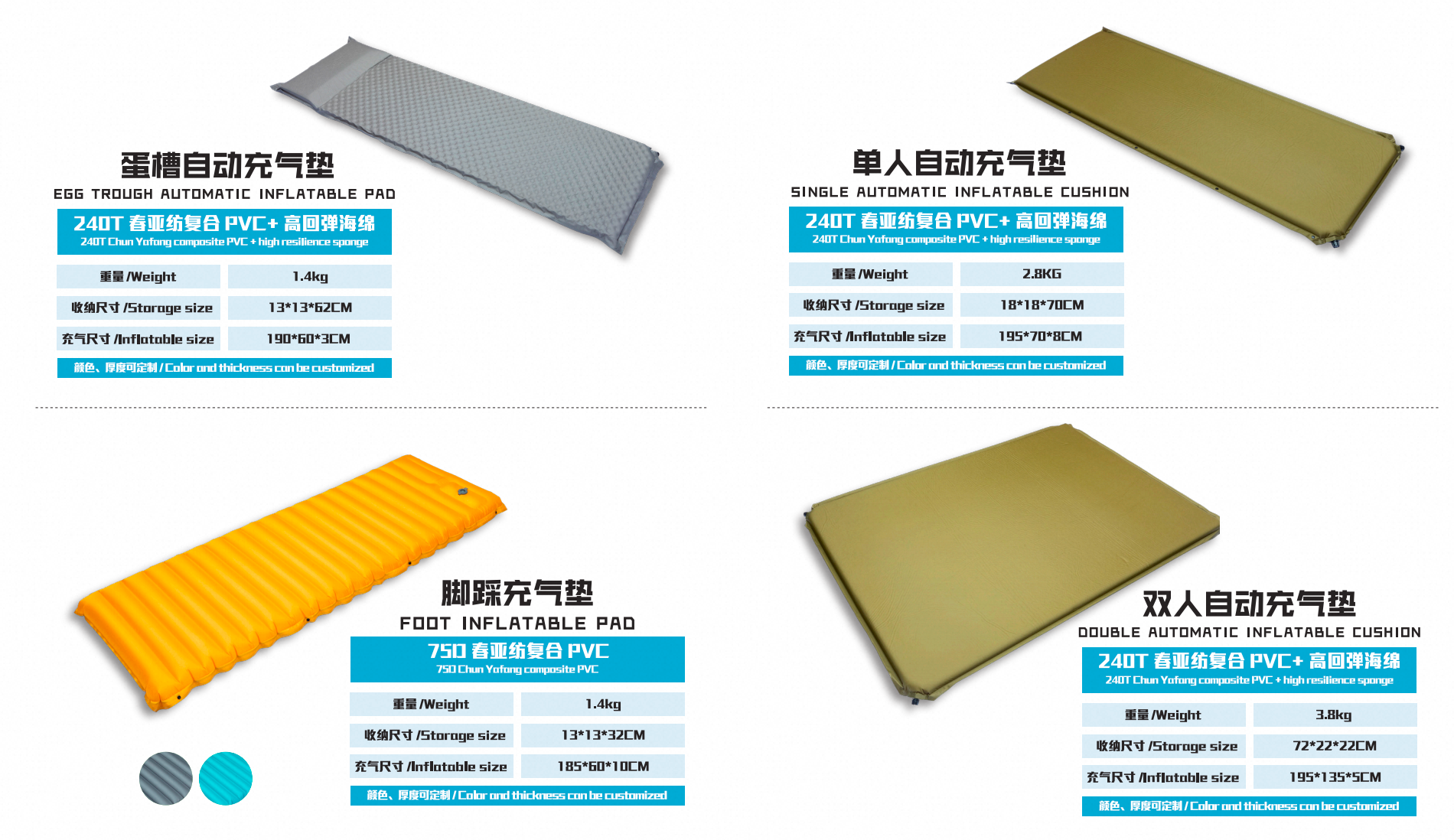
- TPU: A typical TPU-coated nylon sleeping pad weighs 400–600g and packs down to the size of a water bottle. This makes it ideal for backpacking and ultralight applications.
- PVC: A comparable PVC-coated pad weighs 800–1200g and has a larger packed size. PVC is better suited for car camping and stationary use where weight is not a concern.
The weight difference can be 40–60%, which is significant for end users who count every gram. If your market includes backpackers, hikers, or cycle tourists, TPU is essential.
Environmental Impact
Environmental considerations are increasingly important for brands targeting eco-conscious consumers and markets with strict regulations (particularly the EU).
- TPU: Free of plasticizers (phthalates) and heavy metals. TPU is recyclable and does not release harmful chemicals during production or disposal. It complies with REACH, RoHS, and OEKO-TEX standards.
- PVC: Contains plasticizers (often phthalates) that can leach over time. Manufacturing and disposal of PVC can release dioxins and other harmful substances. PVC is restricted or regulated in the EU under REACH and in several US states.
For brands selling in the European market, TPU is increasingly the required choice due to regulatory compliance. Many major retailers now specify TPU or phthalate-free materials in their product requirements.
Cost Comparison
Cost is where PVC has traditionally held an advantage, though the gap has been narrowing as TPU production scales up.
- PVC raw material cost: Approximately 30–50% lower than TPU per kilogram.
- TPU raw material cost: Higher per unit, but less material is needed for equivalent strength, partially offsetting the price difference.
- Manufacturing cost: PVC is easier and cheaper to process, with lower equipment investment. TPU requires higher-temperature welding equipment and more precise quality control.
For budget products targeting price-sensitive markets, PVC remains viable. For mid-range to premium products, the performance and compliance advantages of TPU justify the higher cost.
Which Material Should You Choose?
The following table summarizes the key differences to help you make an informed decision:
| Property | TPU | PVC |
|---|---|---|
| Durability | Excellent (5–10 years) | Good (2–5 years) |
| Weight | Light (400–600g) | Heavy (800–1200g) |
| Packed Size | Very compact | Bulky |
| Cold Flexibility | Excellent | Poor (stiffens in cold) |
| Eco-Friendliness | Recyclable, no plasticizers | Contains phthalates |
| Regulatory Compliance | REACH, RoHS, OEKO-TEX | Restricted in some markets |
| Cost | Higher | Lower |
| Best For | Premium, backpacking, EU market | Budget, car camping, seasonal use |
Conclusion
Both TPU and PVC have their place in the outdoor gear market. TPU excels in durability, weight, environmental compliance, and cold-weather performance, making it the preferred choice for premium and regulation-sensitive markets. PVC offers cost advantages for budget-oriented products where weight and environmental concerns are secondary.
At Xiaoqin Outdoor, we manufacture products in both TPU and PVC materials, giving our B2B clients the flexibility to choose the best option for their target market and price point. We provide full material specifications, compliance documentation, and OEM/ODM customization. and get a tailored quote.